Not every sail belongs on every boat or in every breeze. Learn the basic types first, and a lot of sailing decisions become calmer, faster, and less expensive.
Beginners usually arrive with a sensible cluster of questions: What is the difference between a mainsail and a jib? When would someone use a genoa instead of a smaller headsail? Why do some boats carry large colorful sails downwind while others keep things simpler? Those are the right questions. A sail plan looks elegant from the dock, but on the water it is a working system, not decoration.
The fundamentals are well established. The reference material from the Royal Yachting Association glossary and the training resources from US Sailing both reinforce the same point: sail choice affects balance, control, speed, and crew workload. Choose well and the boat becomes easier to manage. Choose badly and the boat becomes an argument with canvas.
This guide covers the main sail types a new sailor is most likely to hear about, where each one tends to work best, how to choose a sensible setup for your boat, and what basic care keeps sails useful for longer. The goal is not to turn terminology into theater. The goal is to help you recognize what each sail is for and what decision it supports.
Why Sail Types Matter
A sail is a tool with a job description. That job changes with wind angle, wind strength, boat size, hull balance, and how much work the crew can manage comfortably. If you treat every sail as a generic triangle, you miss the operating logic that makes a boat easier to sail.
In plain terms, different sails help a boat do four important things:
- Move efficiently: some sails are shaped for pointing upwind, others for reaching or running.
- Stay balanced: sail area forward or aft changes helm feel and stability.
- Match conditions: smaller sails can keep the boat under control when wind builds.
- Reduce crew strain: the right sail plan lowers trimming effort and makes maneuvers cleaner.
The Wikipedia overview of sail plans is useful as a quick conceptual map because it shows how sail shape and placement fit into the larger rig. That context matters. A sail is not just fabric. It is part of a coordinated system of mast, rigging, deck layout, and handling choices.
Key Terms Before We Start
A few basic terms will make the rest of the article much easier to follow:
- Mast: the main vertical spar that supports the sails.
- Boom: the horizontal spar attached to the bottom edge of the mainsail.
- Headsail: any sail set forward of the mast, usually attached to a forestay.
- Leech, luff, and foot: the back edge, front edge, and bottom edge of a sail.
- Reefing: reducing sail area so the boat remains manageable in stronger wind.
- Upwind, reach, downwind: simple ways to describe the boat’s angle to the wind.
If you are still building your basic onboard kit, the Princess Nazan Deniz Dükkan page is the practical internal place to review sailing-related categories and accessories. Gear and sail handling tend to become one conversation very quickly.
Main Types of Sails
Most beginner-friendly sail plans revolve around a short list of core sail types. Learn these first. Everything else becomes easier to place.
| Sail type | Where it sits | Best use | Beginner takeaway |
|---|---|---|---|
| Mainsail | Behind the mast | Primary driving sail on most boats | Core sail for balance and control |
| Jib | Forward of the mast | General upwind and all-around use | Easier, smaller headsail for everyday sailing |
| Genoa | Forward of the mast | Light to moderate wind, especially upwind and reaching | Larger headsail with more power |
| Spinnaker | Forward and free-flying | Downwind sailing | Powerful but more demanding to handle |
| Gennaker | Forward and free-flying | Reaching and broad wind angles | Simpler than some spinnaker setups |
| Storm sail | Varies by rig | Heavy-weather control | Small, strong sail for serious conditions |
1. Mainsail
The mainsail is the principal sail on most sailboats. It sits behind the mast and attaches to the boom along its lower edge. If you are new to sailing, this is the sail you will feel first in terms of steering balance, heel, and power response.
Its main jobs are straightforward:
- Provide the primary driving force for the boat
- Help control balance with sheet tension, traveler position, and reefing
- Support performance across a wide range of wind angles
A well-trimmed mainsail often determines whether the boat feels composed or fussy. When wind builds, reefing the mainsail early is usually a better decision than waiting until the boat is already overpowered. Boats are not improved by last-minute drama.
2. Jib
The jib is a smaller headsail set forward of the mast. Many training boats and cruisers use a jib because it is versatile and easier to handle than a larger overlapping sail. For beginners, this often makes it the most useful companion to the mainsail.
Why it matters:
- It helps the boat point upwind efficiently.
- It balances the sail plan without becoming too demanding to trim.
- It usually makes tacking and sail handling simpler for a small crew.
If you are learning the relationship between helm feel and sail trim, a modest jib is a sensible classroom. There is enough feedback to teach you, but not so much sail area that every adjustment feels expensive.
3. Genoa
A genoa is also a headsail, but it is larger than a standard jib and typically overlaps the mast area. In lighter winds, a genoa adds useful power and can keep a cruising boat moving well when a smaller jib would feel underpowered.
The tradeoff is operational cost. More area means more pulling force, more sheet load, and more attention during tacks. That does not make a genoa a bad choice. It simply means the crew should be honest about skill level, winch setup, and typical wind conditions.
The sailmaker guidance from North Sails is useful here because it explains how sail shape and size affect use cases in practical rather than mystical terms.
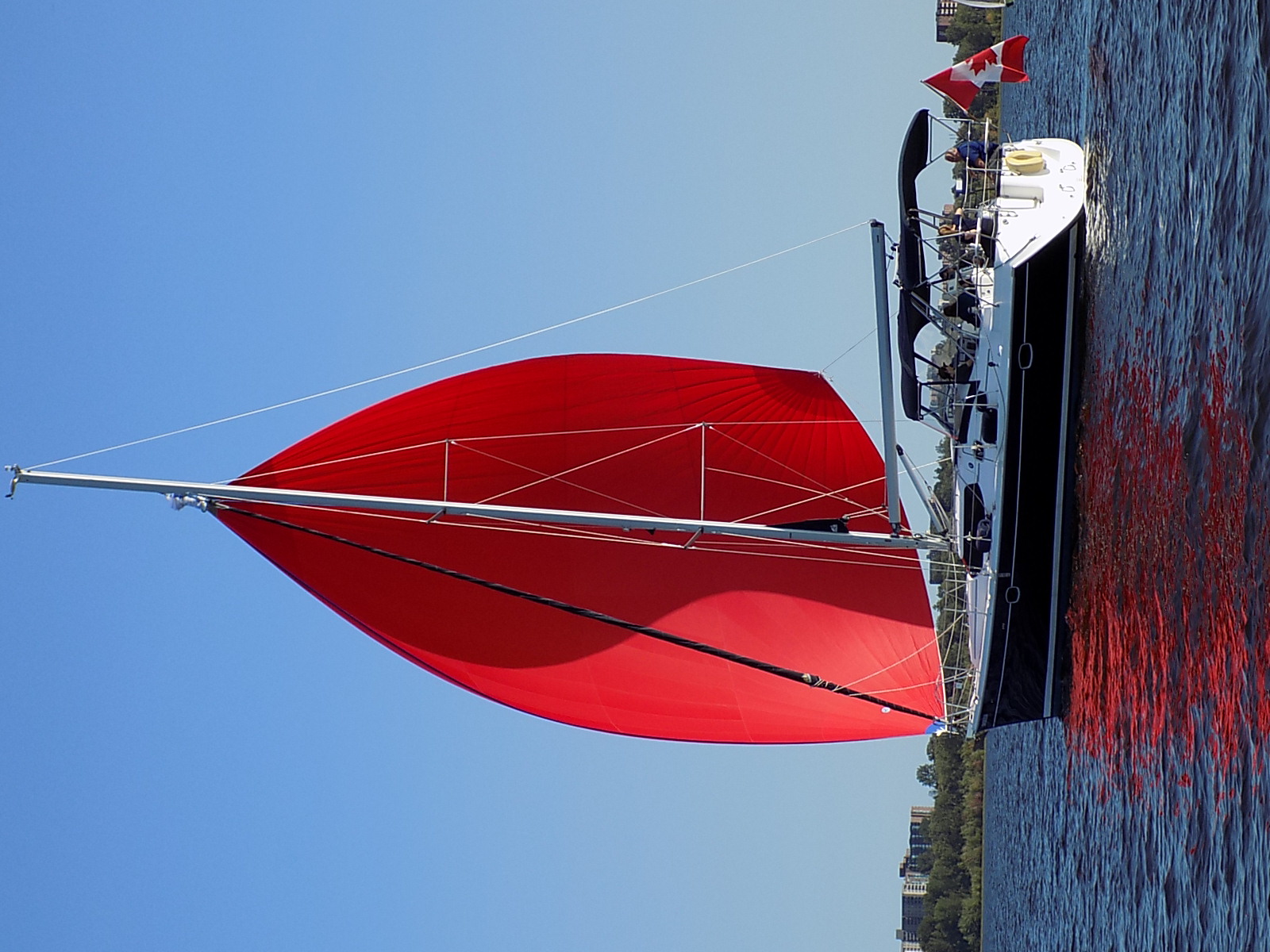
4. Spinnaker
The spinnaker is the big, lightweight, often colorful sail used mainly for downwind sailing. It is designed to catch more air when the wind is coming from behind or from broad angles off the stern. This is the sail many non-sailors notice first because it looks dramatic. For once, the dramatic equipment really is doing a different job.
A spinnaker is valuable because it:
- Improves speed downwind compared with a plain working sail plan
- Creates more projected sail area in lighter air
- Can transform off-wind performance on suitable boats
It is also more complex to hoist, trim, gybe, and recover. Beginners should treat it as a next-step sail, not an immediate requirement. Learn mainsail and headsail basics first. Precision gets cheaper after that.
5. Gennaker and Asymmetrical Downwind Sails
A gennaker, often grouped with asymmetrical spinnakers, sits between a genoa and a traditional spinnaker in function. It is commonly used for reaching and broader angles, especially on cruising boats that want extra downwind power without the full handling complexity of a symmetrical spinnaker setup.
This makes it appealing for boats that want:
- More power than a genoa in lighter off-wind conditions
- Simpler handling than some racing-oriented downwind sails
- A practical option for short-handed crews
If your sailing is mostly coastal cruising with a small crew, a gennaker can be a very practical decision point. It broadens the sail wardrobe without requiring a full jump into advanced sail handling.
6. Storm Jib and Heavy-Weather Sails
A storm jib or other heavy-weather sail is built for control, not for glamour. These sails are smaller, stronger, and designed to keep a boat manageable when conditions become serious. Their purpose is to reduce load while preserving enough sail plan to maintain steerage and balance.
Most beginners will not need to buy storm sails immediately, especially if they sail protected waters in fair weather windows. But it is worth understanding that sail inventories are not only about speed. Some exist to make survival and control possible when the forecast becomes uncooperative.
Choosing the Right Sail for Your Boat
The right sail choice depends less on ambition and more on operating reality. Start with how the boat is actually used.
Match the sail plan to your sailing pattern
Ask four practical questions:
- Where do you sail most often? Protected bays, coastal passages, and open water create different priorities.
- What wind range is normal? A larger headsail may help in light air, but it becomes tiring in frequent stronger conditions.
- How many people usually crew the boat? A two-person crew should not shop like a race team with spare hands everywhere.
- What is your actual skill level? Buy for the sailing you can manage now, not the version of yourself who appears in idealized catalog copy.
For many beginners, the simplest sensible setup is a reefable mainsail plus an easy-to-handle jib or furling genoa. That combination covers a wide range of day sailing and light cruising without adding too much operational friction.
Think in terms of control, not just speed
New sailors often assume more sail area automatically means a better outcome. It usually means more power. Whether that power is useful depends on the crew’s ability to trim, reef, tack, and reduce load quickly. Control is the priority. Speed is what you earn after control is already in place.
If you are comparing possible upgrades, use this rule of thumb:
- Choose a smaller, easier sail when crew experience is limited or wind is often strong.
- Choose a larger or more specialized sail when conditions and crew skill justify the added complexity.
- Choose a reefing or furling-friendly setup when convenience and safety matter more than squeezing out the last increment of performance.
The rest of the site’s blog is a useful next stop if you want to pair sail decisions with maintenance, safety, and onboard preparation. These choices work better as a system than as isolated purchases.
Care and Maintenance of Sails
Sails are durable working equipment, but they age faster when they are left damp, flogged in strong wind, stored badly, or ignored until stitching starts to fail. Basic care is not complicated, but it does need consistency.
What to check regularly
- Stitching: look at seams, corners, and batten pockets for fraying or separation.
- Chafe points: inspect areas that rub against spreaders, rigging, or hardware.
- UV exposure: sun weakens fabric over time, especially in roller-furling headsails.
- Hardware: check slides, hanks, rings, and head or tack attachments.
- Shape changes: old sails can become stretched and less efficient even if they are not torn.
The seamanship material from American Sailing is a helpful external reference for owners who want a straightforward maintenance baseline without turning sail care into a mystery discipline.
Simple habits that extend sail life
Most sail-care wins come from ordinary habits:
- Reduce flogging when hoisting, reefing, or lowering.
- Dry sails before long storage whenever possible.
- Rinse salt and grime when buildup is obvious.
- Use sail covers or UV protection where appropriate.
- Repair small tears or loose stitching early.
Small damage spreads quickly under load. A cheap repair in the loft is generally better than a dramatic failure halfway through a sailing weekend. This is not exciting advice, which is one reason it remains dependable.
A Simple Beginner Sail Strategy
If you want the shortest usable version of this article, keep it simple:
- Learn the mainsail first because it anchors balance and control.
- Pair it with a jib or manageable genoa for versatile everyday sailing.
- Treat spinnakers and gennakers as useful next-step sails once core handling feels routine.
- Understand storm sails as safety equipment for demanding conditions, not beginner essentials for every outing.
That sequence keeps the learning curve clean. It also keeps the buying decisions honest. Sail inventories get expensive when people buy for fantasy conditions or advanced maneuvers before mastering the basics in front of them.
Conclusion
Different sails exist because boats face different jobs. A mainsail provides the core drive and balance. A jib keeps everyday handling practical. A genoa adds power in lighter air. A spinnaker or gennaker helps off the wind. Storm sails reduce risk when conditions harden. Once you understand those roles, sail choice starts to feel rational rather than cryptic.
If you are new to the subject, begin by auditing the sail plan you already have or the one attached to the boat you are considering. Identify the mainsail, check the headsail type, ask whether the setup matches your normal wind range, and prioritize control over wishful performance. That is a better beginning than buying a colorful solution to a problem you do not yet have.
For more practical sailing guidance, return to the homepage, review marine categories in the shop, and keep an eye on the blog for additional beginner-focused articles.