The right sailboat accessories do not make a boat glamorous; they make it ready, and readiness is what actually improves a day on the water.
Most buyers arrive at the same decision point with slightly different wording: Which accessories are essential, which ones are simply nice to have, how much should I spend first, and what can wait until next season? Those are sensible questions. Accessories are where many owners either build a safer, calmer boat or assemble an expensive collection of impulses.
The safety baseline is not guesswork. The U.S. Coast Guard boating safety resources and the National Weather Service marine forecast center both point to the same truth: conditions change faster than equipment shopping habits do. Good accessory decisions support seamanship, preparation, and response time. Poor decisions usually announce themselves when the boat starts moving.
This guide breaks the subject into four buying categories: safety, performance, comfort, and budget discipline. By the end, you should be able to review your current setup, decide what deserves immediate spend, and move the rest into a sensible upgrade list instead of a floating pile of “maybe useful” gear. That is progress, even if it is less exciting than buying stainless steel things on instinct.
A Practical Way to Classify Sailboat Accessories
Before comparing products, define the job each accessory is supposed to do. I would sort sailboat accessories into five plain-language buckets:
- Safety accessories: gear that protects life, helps with rescue, or limits damage when something goes wrong.
- Performance accessories: equipment that improves boat handling, trim, navigation, or crew efficiency.
- Comfort accessories: items that make time aboard easier, cleaner, and more sustainable on longer outings.
- Maintenance accessories: spares and tools that prevent minor wear from becoming a trip-ending problem.
- Luxury accessories: upgrades that are pleasant, but not essential to safety or core function.
That classification matters because it prevents a common buying error: treating every accessory as equal. It is not. A proper-fitting life jacket and a waterproof flashlight belong in a different budget conversation than a better drink holder or upgraded cockpit cushion. One protects a person. The other protects mood. Both have value; they do not have equal priority.
| Category | Main purpose | Typical examples | Buy first when… |
|---|---|---|---|
| Safety | Reduce risk and improve emergency response | PFDs, flares, whistle, VHF handheld, first aid kit, fire extinguisher | The boat is missing required or basic protective gear |
| Performance | Improve control, trim, and awareness | Lines, blocks, telltales, GPS, wind meter, winch handle storage | The boat is hard to handle or information is unreliable |
| Comfort | Make onboard time easier and less fatiguing | Shade, storage bins, seat cushions, galley tools, dry bags | Crew comfort limits trip length or enjoyment |
| Maintenance | Keep small failures from expanding | Spare shackles, tape, repair kit, knife, spare bulbs, corrosion spray | You sail often or away from convenient support |
| Luxury | Add polish after core needs are covered | Premium tableware, decorative lighting, upgraded audio | The boat is already safe, functional, and well organized |
If you start with this framework, the rest of the buying process becomes easier. You are no longer asking, “What should I buy?” You are asking, “What problem am I solving first?” That is a better question.
Key Accessories for Safety
Safety gear is the first budget line, not the leftover one. Every sailor likes performance improvements. Every sailor also likes coming back. Priorities should reflect that.
1. Life jackets and personal flotation devices
A boat should have enough properly sized life jackets for every person aboard, plus a habit of checking fit before departure rather than after the forecast becomes educational. The U.S. Coast Guard boating guidance is useful here because it keeps the conversation grounded in fit, readiness, and legal baseline, not just catalog language.
For most crews, the real decision is not simply “Do we have life jackets?” It is:
- Do we have the right sizes for the actual people who sail with us?
- Are they comfortable enough that people will wear them when conditions deteriorate?
- Are they stored where they can be reached quickly?
- Do they need lights, whistles, or harness integration for the type of sailing we do?
Inflatable PFDs can be a good answer for adults who dislike bulk, but only if the crew understands inspection and re-arming requirements. Foam vests are simpler and often better for guests, children, or boats where gear maintenance is inconsistent. Simplicity is underrated because it lacks marketing language.
2. Emergency signaling and communication
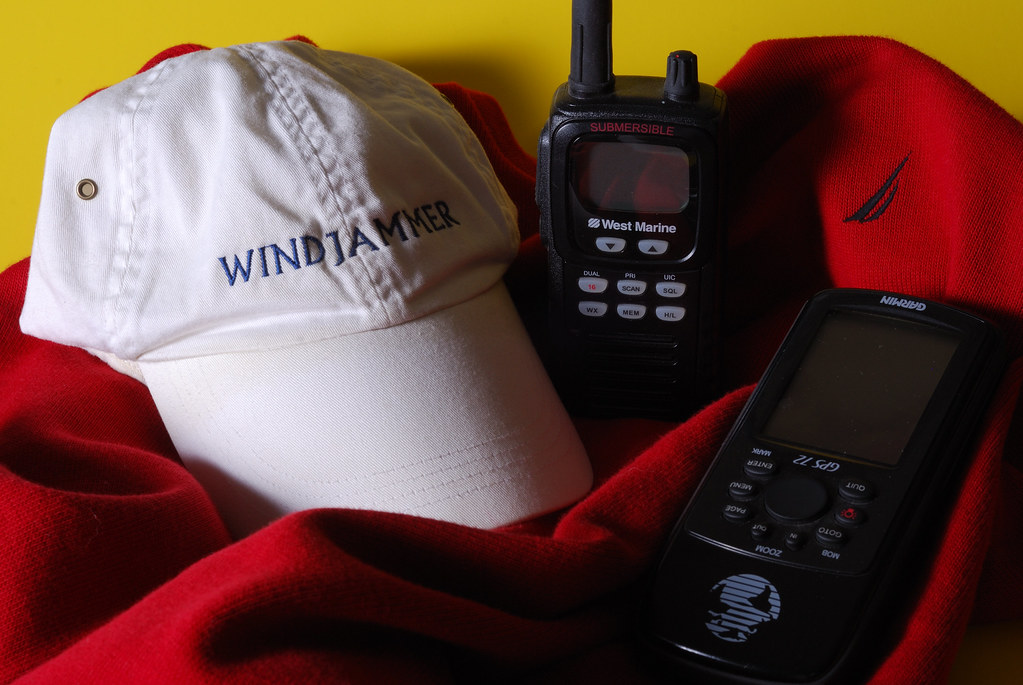
Visual distress signals, whistles, waterproof flashlights, and a handheld VHF radio are not glamorous purchases, but they are high-value accessories because they improve the chance of being seen and understood when normal operations break down. A fixed VHF is excellent. A charged handheld backup is better than confidence alone.
Think of signaling gear as layers:
- Immediate sound: whistle or horn for nearby attention.
- Immediate light: waterproof flashlight or strobe for low visibility.
- Short-range communication: handheld VHF for cockpit-level response.
- Visual distress: flares or approved distress devices for urgent escalation.
If your current setup depends on one battery, one device, or one person remembering where something was stowed, the system is fragile. Accessories should reduce fragility.
3. Fire extinguishers, first aid, and recovery basics
Even small sailboats should carry an accessible fire extinguisher, a first aid kit sized to the kind of trips they actually take, and a boarding ladder or recovery aid that helps someone get back aboard. This is where many owners under-buy because the problem feels hypothetical. Unfortunately, water has a talent for turning hypothetical into administrative detail.
A workable onboard first aid kit should include more than adhesive bandages. At minimum, evaluate whether it has:
- Dressings for cuts, rope burns, and minor punctures
- Seasickness support if your crew is not seasoned
- Basic pain relief
- Gloves and antiseptic supplies
- A waterproof pouch and a simple contents checklist
Do not buy the kit, toss it into a locker, and declare victory. Review expiration dates, replace used items, and make sure more than one person aboard knows where it lives.
Performance-Enhancing Accessories
Once the safety baseline is covered, performance accessories deserve attention because they improve efficiency, reduce fatigue, and make the boat more predictable. Predictability is a form of comfort and, at times, a form of safety.
1. Sails, rigging upgrades, and line handling improvements
Not every performance upgrade requires buying a new sail. Often the first gains come from replacing worn sheets, organizing control lines, adding clearer telltales, upgrading a tired block, or improving how gear is led back to the cockpit. These changes reduce friction in a literal sense and in a crew-management sense.
Consider these questions during inspection:
- Are lines easy to identify quickly?
- Do clutches, cam cleats, and blocks still work smoothly under load?
- Can the crew trim and reef without awkward body positions?
- Are there small upgrades that would reduce cockpit clutter?
If the answer to several of those is no, spend there before chasing more dramatic hardware. A boat that is easier to manage will usually feel faster because the crew can respond sooner and with less confusion.
2. Instruments that improve decisions, not just the dashboard
GPS units, chartplotters, wind indicators, depth instruments, and handheld backups earn their keep when they support better decisions rather than simply making the boat look well equipped. A clean navigation setup should answer practical questions quickly: Where are we, what is the depth trend, what is the wind doing, and what is changing next?
The National Weather Service marine forecast center is a good reminder that instruments and forecast awareness belong in the same workflow. A wind display is useful. A wind display combined with weather monitoring and conservative judgment is useful for longer than five minutes.
For newer sailors, continuing education can sharpen the value of onboard instruments. The training resources collected by US Sailing’s adult education program are a sensible complement to equipment upgrades because the best screen in the cockpit still depends on the person reading it.
3. Weight control, stowage, and trim support
Some performance problems are not hardware problems at all. They are storage problems pretending to be performance problems. Weight placed too far forward, too far aft, or too high can make a sailboat less balanced and less comfortable. Accessories that help organize weight matter more than they appear to.
Useful examples include:
- Compact deck bags for frequently used lines or tools
- Dedicated bins for safety gear so heavy items do not migrate loosely
- Secure galley and cabin storage that reduces shifting under heel
- Battery or equipment mounts that keep load placement deliberate
Good trim begins with discipline. Accessories can support that discipline, but they cannot replace it.
Comfort and Convenience Items
Comfort gear is sometimes dismissed as secondary. That is a mistake on boats used for day cruising, charters, family sailing, or longer weekends aboard. Comfort extends patience, and patience improves decision-making. Tired, wet, hungry crews do not become strategic because the owner saved money on storage bins.
1. Seating and storage solutions
Cockpit cushions, back supports, non-slip mats, and dry storage are modest upgrades with outsized results. The best comfort accessories are the ones that remove recurring irritations. If everyone aboard keeps asking where to put phones, sunscreen, spare layers, or wet gear, the boat is telling you what to buy.
When reviewing storage products, prefer:
- Water resistance over soft marketing claims
- Secure fastening over loose convenience
- Quick drainage and ventilation where gear gets damp
- Shapes that fit the boat’s real spaces, not showroom fantasies
If you want a practical starting point for onboard accessory categories, the shop page is the best internal reference on this site. Use it as a shortlist tool, not as an excuse to buy everything at once.
2. Galley and cooking accessories
The smallest galley items can have the biggest effect on whether time aboard feels relaxed or improvised in the bad sense. Prioritize equipment that is compact, stable, easy to clean, and difficult to break. A few good pieces beat a drawer full of marginal ones.
Worth considering:
- Nesting cookware that saves cabinet space
- Non-slip trays and mats that reduce mess underway
- Insulated drinkware and food storage that handle motion better
- Manual tools that still work if electrical support is limited
New owners often overspend here because the products are attractive and easy to imagine using. Keep the standard simple: if it does not store securely, survive motion, or solve a repeated inconvenience, it probably belongs in the “later” column.
3. Shade, weather protection, and dry-crew accessories
Biminis, cockpit covers, dry bags, quick-dry towels, and layered rain gear are comfort purchases that also protect energy and morale. On boats used in sunny or changeable conditions, these accessories often deliver more real value than decorative upgrades.
The broader planning material gathered in Discover Boating’s articles and resources is useful for newer owners because it connects gear choices with trip planning, weather awareness, and onboard routines. Accessories work best when they are part of a system, not random applause for online shopping.
How to Budget for Sailboat Accessories Without Wasting Money
Budget discipline matters because accessories are a category where spending can drift quietly. Each individual purchase feels small. The total usually disagrees. I prefer a staged budget rather than a wish-list budget.
Stage 1: Fund the non-negotiables
Begin with safety items and anything currently broken, missing, or clearly inadequate. This includes PFDs, communication backups, first aid, fire protection, and any worn line-handling components that make ordinary sailing harder than it should be.
Stage 2: Fix friction
Next, buy accessories that remove recurring frustration. This is the highest-return category for many owners. Examples include better storage, cockpit organization, dry bags, shade, clearer line labels, or a more reliable handheld navigation backup. These purchases often improve every outing, not just the dramatic ones.
Stage 3: Upgrade quality where usage is highest
After the basics are covered, improve the items you touch constantly: gloves, winch handle storage, galley essentials, navigation tools, or seating support. Daily-use items justify better construction because their value is cumulative.
Stage 4: Leave room for spares and maintenance
Set aside a portion of the accessory budget for replacement parts, seasonal wear items, and consumables. Owners who spend every dollar on visible upgrades often end up postponing the less visible gear that keeps the boat functional.
| Budget tier | Suggested share | What belongs there |
|---|---|---|
| Safety first | 35% to 45% | PFDs, signaling, VHF backup, first aid, fire protection |
| Performance and handling | 20% to 25% | Lines, blocks, telltales, navigation support, deck organization |
| Comfort and convenience | 20% to 25% | Shade, seating, storage, galley improvements, dry-crew gear |
| Maintenance reserve | 10% to 15% | Spare parts, repair kits, replacement wear items |
Those percentages are not laws. They are a management tool. The exact split should reflect your sailing style, boat size, crew needs, and the condition of the gear already aboard.
When evaluating price, compare more than the sticker:
- Replacement frequency: a cheap item bought three times is not cheap.
- Storage cost: bulky gear that never fits the boat has hidden cost.
- Failure cost: accessories tied to safety or handling deserve a stronger quality threshold.
- Usage rate: frequent-use accessories justify better materials.
If you are building a new onboard kit, buy in passes. Start with a baseline list, sail with it, note what the crew actually reaches for, and then adjust. Boats reveal priorities through use. That is far more reliable than buying according to abstract enthusiasm.
Common Buying Mistakes to Avoid
- Buying for a fantasy itinerary: outfit the boat for how it is used now, then add specialized gear later.
- Overlooking storage: even excellent accessories become clutter if they have no stable place aboard.
- Ignoring compatibility: verify fit, line sizes, mounting needs, and electrical requirements before ordering.
- Confusing visibility with value: polished hardware gets attention; reliable safety basics often do the real work.
- Skipping crew input: the person trimming, cooking, or managing guests often knows exactly where the friction lives.
A final caution: do not let “marine grade” end the evaluation. It is a useful phrase, but not a complete argument. Check materials, hardware quality, stitching, corrosion resistance, serviceability, and whether the item solves a real problem on your boat.
Final Recommendations
The right sailboat accessories improve three things: safety, performance, and comfort. That sounds obvious, but many buying decisions fail because they optimize only one of the three. A balanced boat is usually the better boat.
Start by auditing what is already aboard. Replace missing or weak safety items first. Upgrade the accessories that reduce crew friction second. Add comfort and presentation upgrades after the boat is already organized and dependable. That order protects both budget and outcomes.
If you want the shortest version of this guide, it is this: buy for function before polish, buy for your real sailing pattern, and review gear as a system rather than as isolated products. That is the practical path.
For the next step, return to the homepage for the broader visitor experience, browse the shop page for relevant marine categories, or check the blog for additional planning and onboard living articles as new posts are added.